
Part 2 · 2.1 · Roots and rhizomes
Ashwagandha
By THE HERB ITSELF · Updated
A popular root, now root-only by law in India.
- Botanical name
- Withania somnifera
- Also called
- Asgandh, Winter cherry
- Part used
- Root. Sold as powder, extract, capsules and gummies.
- Body areas
- Sleep
- Where it has been studied in people.
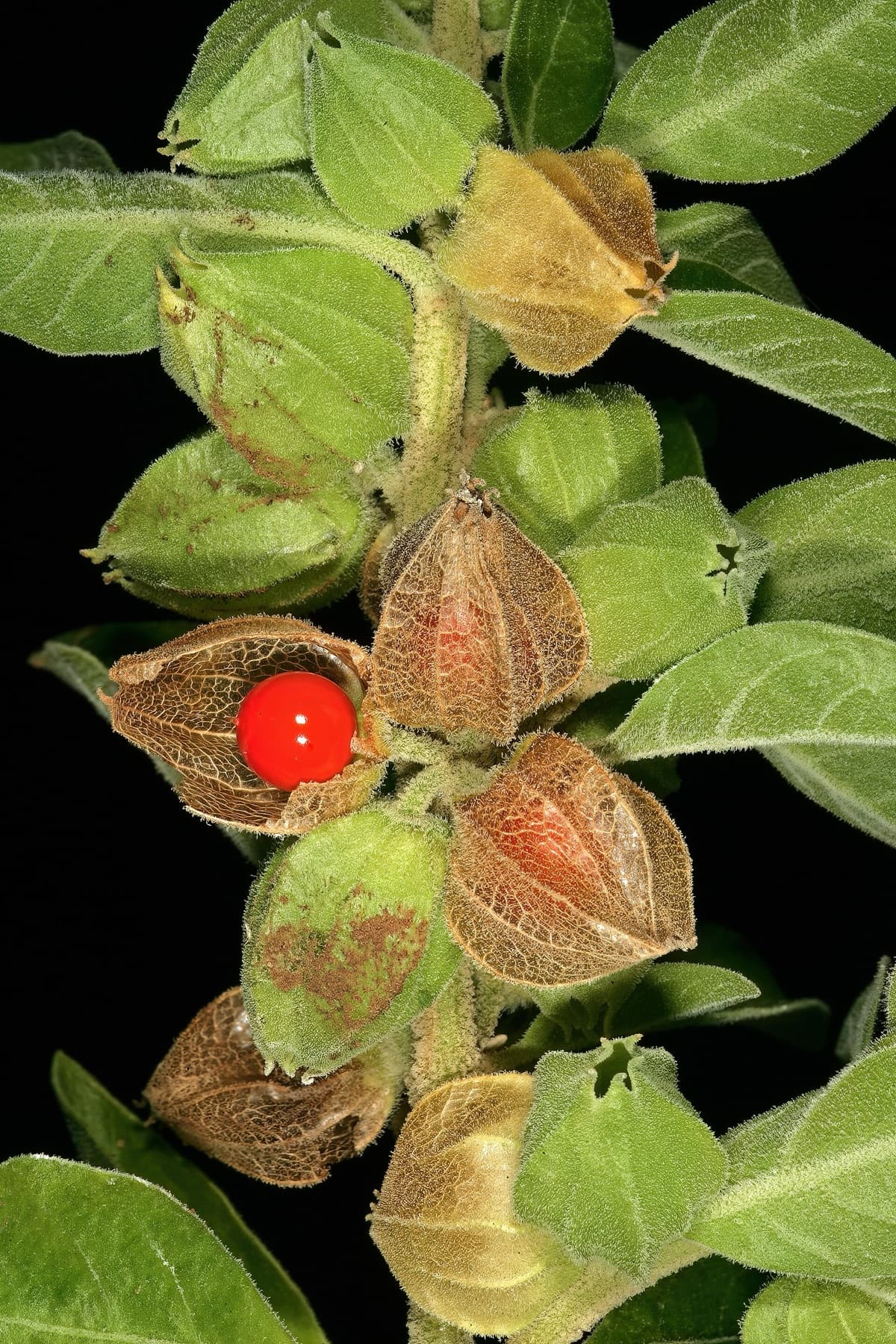
The plant: berries in papery husks
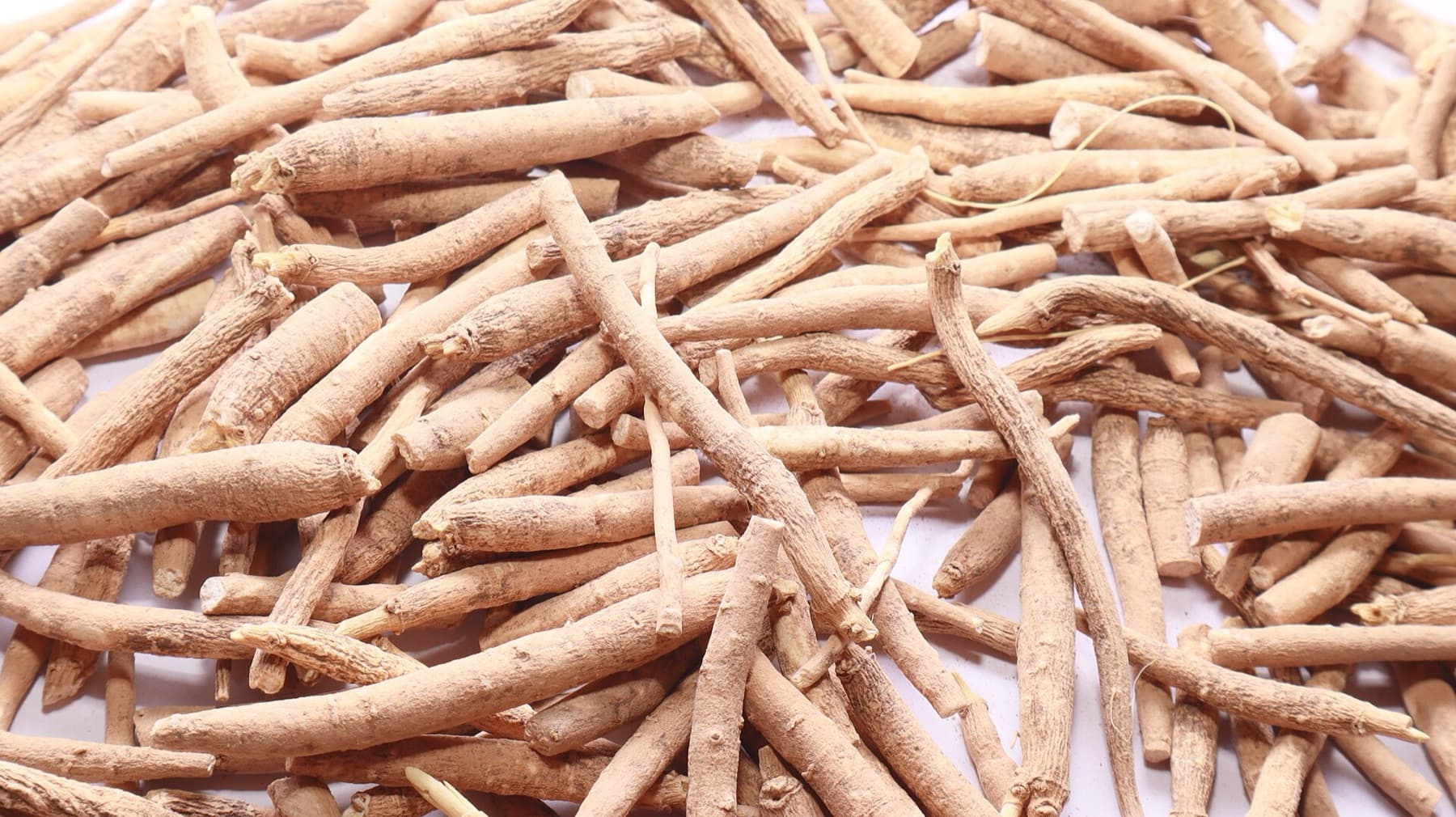
The root, dried, as it is sold
In everyday life
Ashwagandha is sold as powder, capsules, gummies and drink mixes, mostly for stress and sleep.
The classical remedy is the root. Leaves are cheaper, and were being used anyway.
Source: NutraIngredients, 2026
What people say, and what research shows
Often said
- Stress
- Sleep
- Strength
What research showsB
B for stress and anxiety: 12 trials with 1,002 adults, mostly of root extracts at set doses (Merck Manual). Sleep: a small benefit (see below).
What gets faked or mixed up
Leaves instead of root
On 15 April 2026 the Ministry of Ayush said only the root may be used in Ayush medicines and banned the leaves in any form. On 16 April FSSAI applied the same rule to foods and supplements. In May 2026 the Karnataka High Court paused both for the eight companies that challenged them.
Sources: FSSAI advisory, April 2026 · NutraIngredients, 2026 · SupplySide, 2026
How to get the real one
Look for the word root
Root or root extract: fine. Leaf or whole plant: ask the maker. No part named: don’t buy.
Source: FSSAI advisory, April 2026
Watch out for
Denmark has banned it in supplements since 2023 (SupplySide). The studies used root extracts at a set dose, so a page or pack should say the dose.
What has been studied
We don’t sell this herb. These cards say what researchers gave, in what form and amount, and what they found.
Sleep
A pooled analysis of placebo-controlled trials in adults.
- What was tested
- Randomised trials compared ashwagandha extract with a placebo for sleep in adults.
- What it found
- Overall sleep improved a little. The effect was larger in people who slept badly to begin with, at 600 mg a day or more, and over eight weeks or longer. Alertness on waking and anxiety improved too; quality of life did not. No serious side effects were reported, but the authors say there is too little safety data to judge long-term use.
Cheah et al., 2021 · PLoS One
Before you take it
Liver injury is rare but reported. A 2026 review found 25 cases worldwide, usually weeks after starting; most people recovered after stopping, and the authors advise people with advanced liver disease to avoid it. Avoid it in pregnancy and while breastfeeding, and ask a doctor first if you take thyroid or blood-pressure medicines (NCCIH) or have a liver condition.
Source: McIntyre et al., 2026
Pregnant, breastfeeding or on medicine? Ask your doctor first.
Where to get it
We don’t sell ashwagandha. This chapter is here so you can buy it well, wherever you buy it. Want us to look at another herb?
THE HERB ITSELF products are food, not medicine. This page describes traditional use and published studies. It is not medical advice, and not a promise of any outcome.