
Part 2 · 2.16 · Leaves and aerial herbs
Shankhpushpi
By THE HERB ITSELF · Updated
One name, different plants: white in most texts, blue in Kerala.
- Botanical name
- Convolvulus pluricaulis
- Also called
- Butterfly pea (one of three)
- Part used
- Whole plant. Sold as syrups and powders. Also listed as Convolvulus prostratus.
- Body areas
- Memory
- Where it has been studied in the lab.
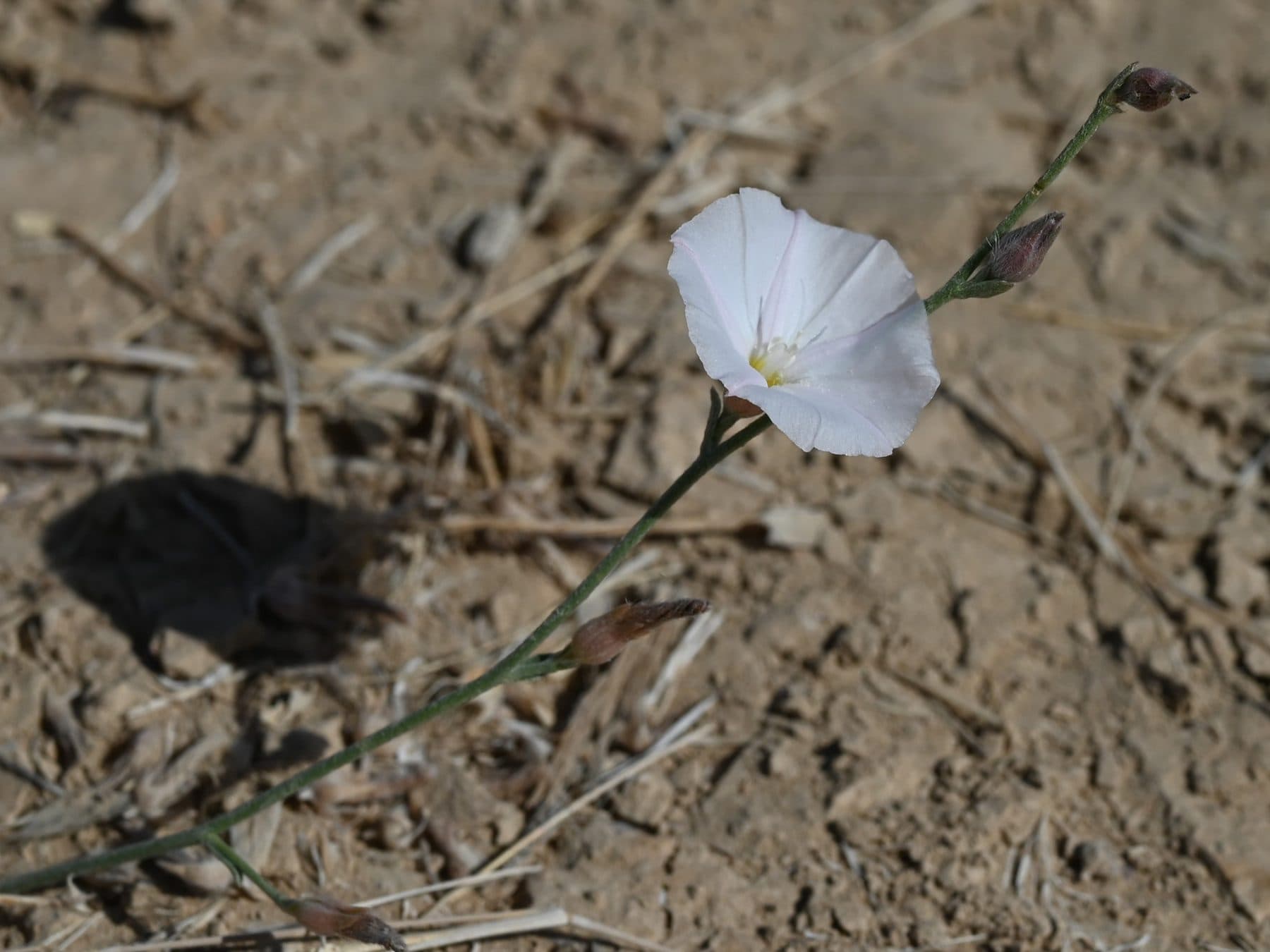
Convolvulus pluricaulis: white, the plant most texts mean
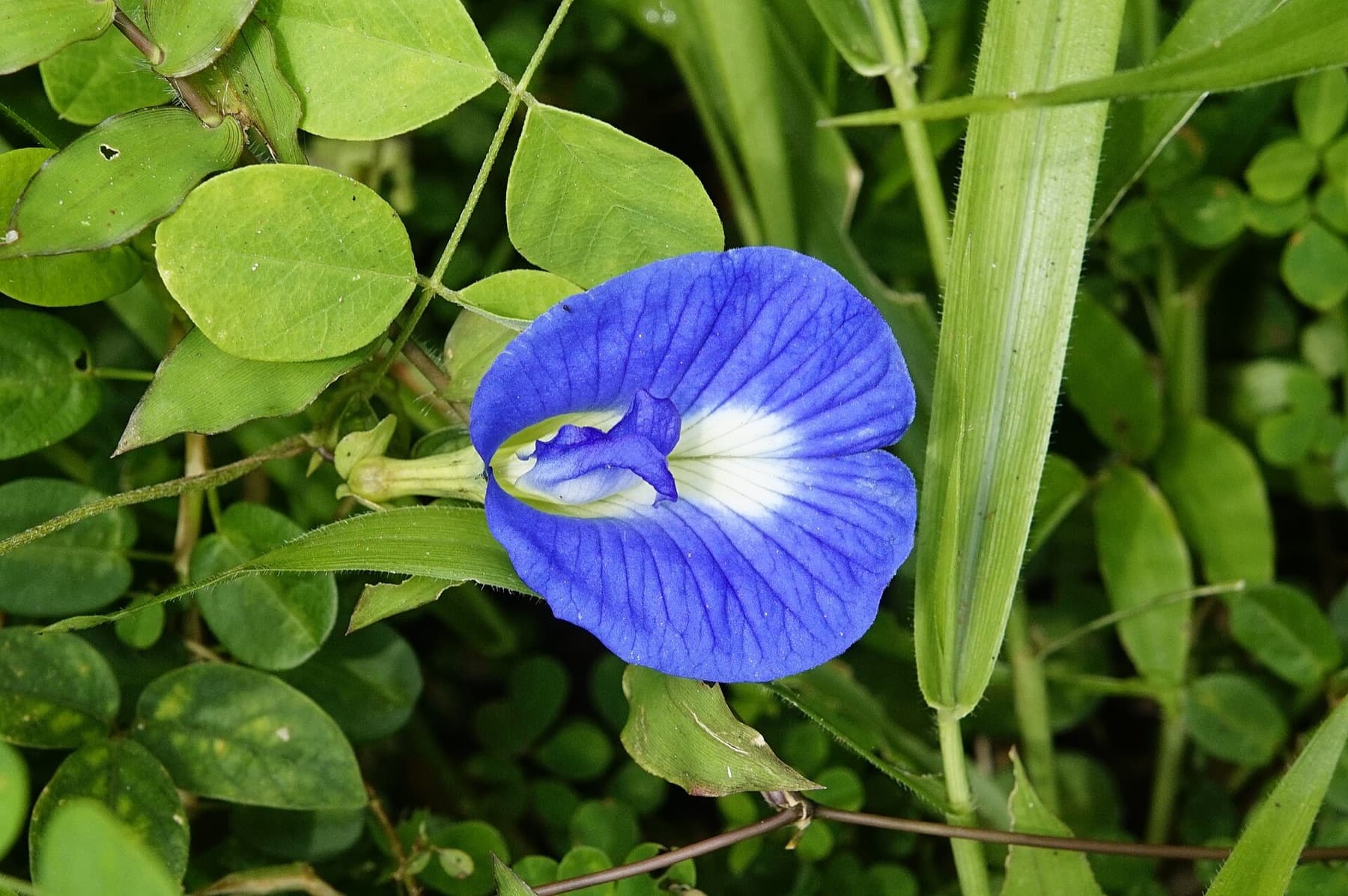
Butterfly pea: blue, Kerala’s shankhupushpam
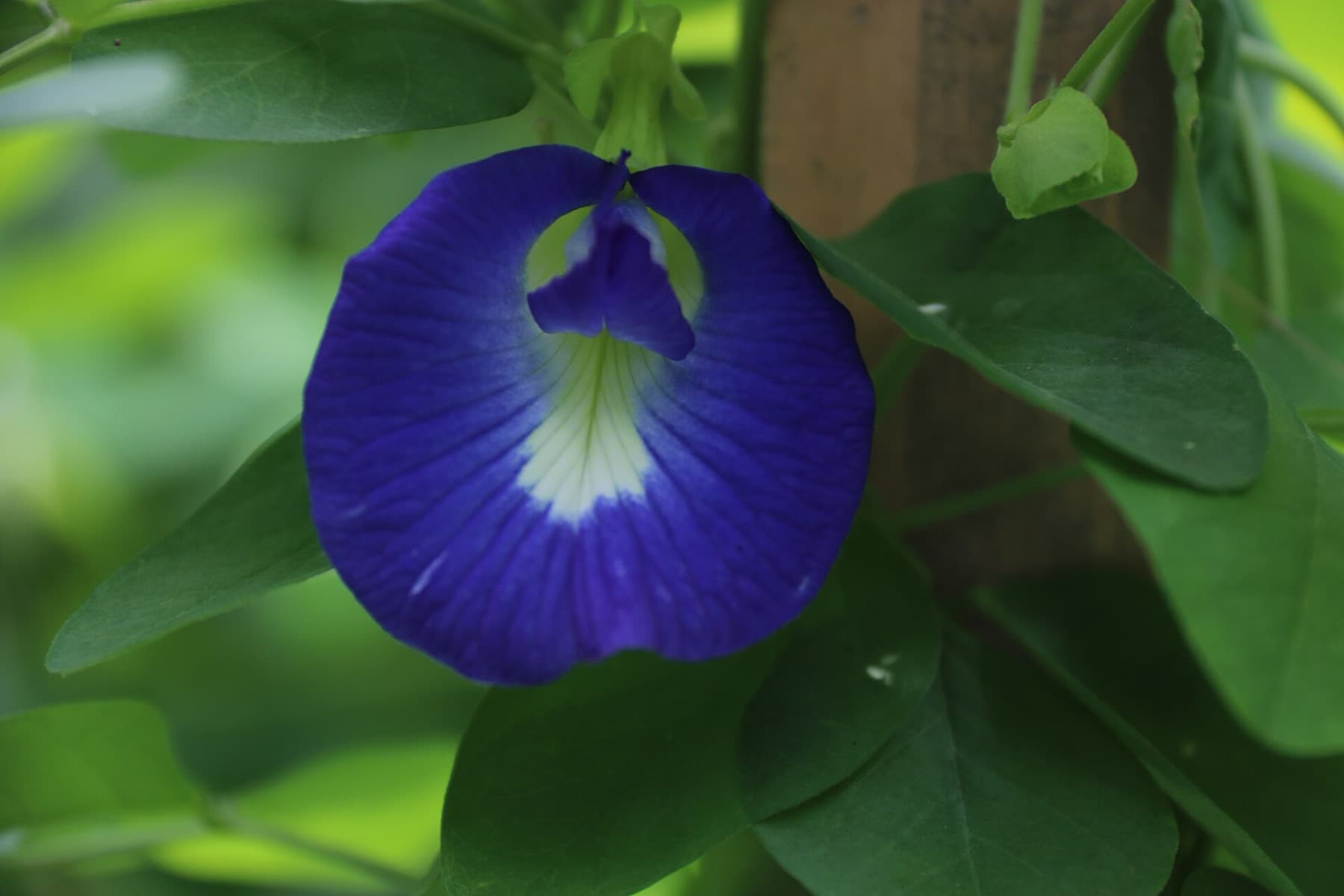
Butterfly pea, close
In everyday life
Search “shankhpushpi” and you’ll see two colours of flower. The name covers different plants. Most texts mean Convolvulus pluricaulis, a small plant with white to pale-pink flowers. In Kerala, “shankhupushpam” is the butterfly pea (Clitoria ternatea), a climber with large blue flowers. A third plant with small blue flowers, Evolvulus alsinoides, is sold under the name too. They are different plants, with different chemistry.
Shankhpushpi syrups and powders are bought for memory and calm, often for children.
Sources: Malik et al., 2011 · St Mary’s College, Sulthan Bathery, botany
What gets faked or mixed up
Three plants, one name
Convolvulus pluricaulis, Evolvulus alsinoides and butterfly pea (Clitoria ternatea) are all sold as shankhpushpi in different parts of India.
Source: Malik et al., 2011
How to get the real one
Ask for the botanical name
A syrup or powder that only says shankhpushpi could hold any of the three. The plant a lab study proposed as the true source is Convolvulus pluricaulis.
Source: Malik et al., 2011
What has been studied
This one is a lab study in animals, not a trial in people. It compared the three plants side by side.
Which plant is shankhpushpi?
Extracts of the three plants sold under the name, tested side by side.
- What was tested
- Memory, anxiety, mood and sedation tests compared Convolvulus pluricaulis, Evolvulus alsinoides and butterfly pea (Clitoria ternatea).
- What it found
- All three showed memory, calming and sedating effects; only E. alsinoides and butterfly pea showed antidepressant activity. On the memory results, the authors propose Convolvulus pluricaulis as the true shankhpushpi.
Malik et al., 2011 · Pharmaceutical Biology
Before you take it
Pregnant, breastfeeding or on medicine? Ask your doctor first.
Where to get it
We don’t sell shankhpushpi. This chapter is here so you can buy it well, wherever you buy it. Want us to look at another herb?
THE HERB ITSELF products are food, not medicine. This page describes traditional use and published studies. It is not medical advice, and not a promise of any outcome.