
Part 1 · 1.4
How labs tell real from fake
By THE HERB ITSELF · Updated
No single test catches every fake. Each method answers one question. A good lab report says which questions were asked.
Which test answers which question
The main methods
| Method | What it does | What it catches |
|---|---|---|
| DNA barcoding | Reads short stretches of DNA and matches them to a reference library of known plants. | A swapped or lookalike plant. Only as good as its reference: a checked library matched every sample, a public database only 64%. (Shanmughanandhan et al., 2016) |
| DNA metabarcoding | Reads the DNA of every plant in a mix at once. | Plants that are not on the label, even in small amounts. The method that found unlabelled plants in Brahmi products. (Shah et al., 2023) |
| Chromatography (TLC, HPLC) | Separates a sample into its compounds and looks for the plant’s marker compounds. | Whether the right plant is there, and how much of its key compounds. Cannot see other plants mixed in. Sappan is checked for brazilin and protosappanin B. (Chen et al., 2010) |
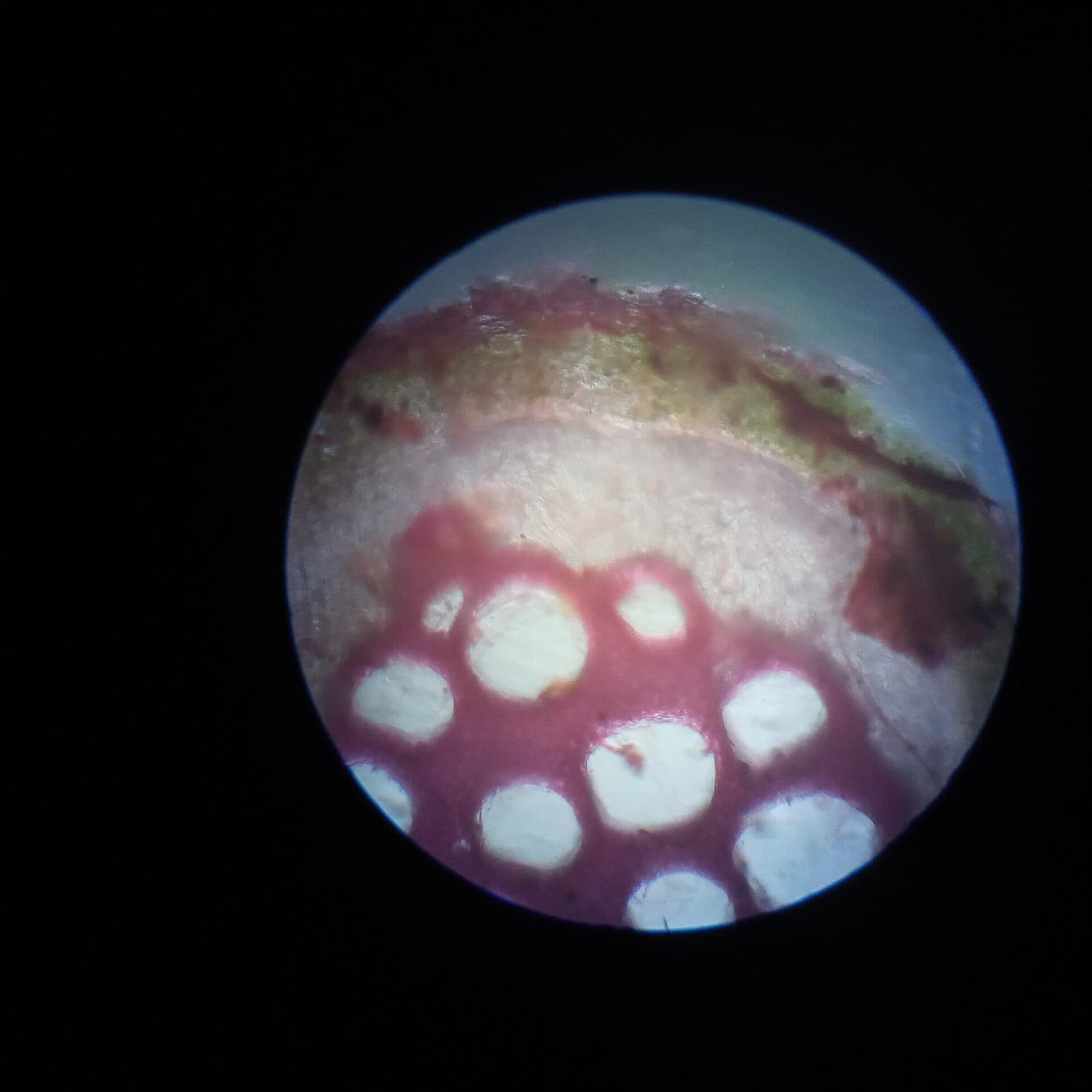
| Microscopy | Looks at the plant’s cells and structures under a microscope. | Other flowers or plant parts mixed in. Used to confirm safflower in market saffron. (Heyrani et al., 2025) |
| Spectroscopy (UV-visible, Raman, infrared) | Shines light through or onto a sample and reads the pattern that comes back. | Added dyes, and a cheap wood stained with the real pigment. Sorted dyed from clean sappan wood correctly 92 to 94% of the time. (Batubara et al., 2022) |
| Mass spectrometry (LC-MS) | Weighs molecules very precisely to identify them. | Hidden medicines, such as steroids and painkillers. How the steroid in herbal pain products was found. (Savaliya et al., 2009) |
A grade is not an identity test
Some herbs have a quality grade. Saffron is graded under ISO 3632 on aroma, flavour and colour strength. But a 2021 study reports that safflower, marigold or turmeric at up to 20% by weight can slip past that grading (De Angelis et al., 2021). A grade tells you how strong something is, not that it is all the right plant.
Why labs combine methods
The American Botanical Council’s adulteration programme says a complete set of different tests is needed to authenticate saffron (via NutraIngredients). The same holds for most herbs: an identity test (DNA or marker compounds) plus checks for what should not be there (dyes, fillers, drugs, contaminants).
What to ask for
- The plant’s botanical name and part, as tested.
- The identity test, and its method.
- What else was tested for: heavy metals, microbes, pesticides, dyes.
- Who tested it, and whether that lab is accredited.
- The batch the report belongs to.
We are building this for our own herbs: enter the batch code from a pack on our batch page to see its report, once the first batch is out.
This guide is for buying well. It is not medical advice. If you are pregnant, take regular medicines or have a health condition, talk to your doctor before taking any herb as a remedy.